15 Places That Hire Teenagers for First Jobs (And What They Actually Learn)

When your teenager announces they are ready to look for their first job, most parents immediately think of the fast-food chains down the street. While fast food can teach reliability and teamwork through highly structured workflows, it is not the only entry point. Parents should also consider environments where teenagers regularly face more unpredictable situations that require judgment, communication, and independent problem-solving.
If you want their first workplace experience to actively build capabilities they will use for the rest of their lives, you have to look closely at what they will actually be doing during their shifts.
Here are fifteen types of workplaces that commonly hire teenagers, broken down by the literal day-to-day tasks required and how those environments naturally build real-world capability.
1. Youth Sports Leagues
The Role: Referee or Umpire.
Best For: Teens who enjoy sports, athletics, and making decisions independently.
The Literal Tasks: Blowing a whistle, calling balls and strikes, tracking the game clock, and recording scores.
What This Experience Teaches: Judgment under pressure. Standing on a field making a split-second call while passionate parents and competitive coaches watch forces a teenager to practice independent decision-making and stick to a rulebook in real time.
2. Community Pools or Swim Schools
The Role: Lifeguard or Assistant Swim Instructor.
Best For: Strong swimmers who are observant, reliable, and comfortable taking on safety responsibilities.
The Literal Tasks: Sitting on the stand scanning the water, testing pool chemical levels, or holding a kickboard for a five-year-old.
What This Experience Teaches: High-stakes accountability. There is no passive scrolling on a phone here. The literal task of keeping eyes on a pool builds strong situational awareness and a deep understanding of personal responsibility.
3. Summer Day Camps
The Role: Camp Counselor or Counselor-in-Training (CIT).
Best For: Energetic, social teens who enjoy mentoring kids and leading group activities.
The Literal Tasks: Counting heads every fifteen minutes, leading games, and keeping kids on schedule.
What This Experience Teaches: Group responsibility. When a teen is handed ten children and a daily schedule, they are forced to step completely out of their own head. The job forces them to manage group dynamics, keep people moving on time, and handle minor kid crises.
4. Local Golf Courses
The Role: Caddy or Turf Crew.
Best For: Early risers who enjoy being outdoors, walking, and learning professional social skills.
The Literal Tasks: Carrying a heavy bag, wiping down clubs, tracking down golf balls, or raking sand traps at 6:00 AM.
What This Experience Teaches: Adult communication and professional etiquette. Spending hours around adult golfers forces a teenager to practice basic professionalism, communication, and situational awareness outside their normal peer group.
5. Local Hardware Stores
The Role: Floor Assistant or Stocker.
Best For: Curious, hands-on teens who enjoy fixing things and organizing physical objects.
The Literal Tasks: Sorting bins of loose fasteners, sweeping the aisles, unloading trucks, and walking customers to specific items.
What This Experience Teaches: Practical problem-solving. Customers usually show up with a broken part or a vague description of a home repair issue. The task of helping them find a solution teaches a teenager how to ask clear, analytical questions.
6. Sit-Down Casual Restaurants
The Role: Host or Busser.
Best For: High-energy teens who thrive in fast-paced environments and can handle constant social interaction.
The Literal Tasks: Greeting people, wiping down menus, walking parties to tables, clearing dirty plates, and resetting booths.
What This Experience Teaches: Real-time prioritization. Unlike highly standardized workflows, a busy dining room floor shifts constantly. Learning how to balance a line of people waiting to be seated while tracking which tables are dirty teaches a teen how to triage tasks on their feet.
7. Community Theaters or Local Event Venues
The Role: Stagehand or Audio/Visual (A/V) Assistant.
Best For: Tech-oriented, behind-the-scenes teens interested in production, audio, or live performances.
The Literal Tasks: Taping down extension cords, moving chairs, holding a spotlight, and checking off audio cables on a clipboard checklist.
What This Experience Teaches: Checklist execution and technical care. If a cord is misplaced or an input is missed, the live event suffers instantly. The job teaches a teen that small, invisible preparation steps have a direct impact on a larger team project.
8. Independent Neighborhood Services
The Role: Self-Directed Lawn Mower, Dog Walker, or Pet Sitter.
Best For: Highly disciplined self-starters who want flexibility and enjoy setting their own hours.
The Literal Tasks: Pushing a mower across a neighbor’s yard, showing up twice a day to feed a pet, and collecting a check.
What This Experience Teaches: Micro-entrepreneurship. When a teen handles their own neighborhood route, they are fully in charge. The task of managing their own schedule, communicating directly with neighbors, and keeping track of earnings introduces them to how a small business operates.
9. Local Bicycle or Small Engine Repair Shops
The Role: Shop Hand or Assistant.
Best For: Detail-oriented, mechanically inclined teens who like tinkering with tools and machinery.
The Literal Tasks: Degreasing chains, wiping down frames, organizing tools on a shadow board, and unpacking boxes of inner tubes.
What This Experience Teaches: Mechanical literacy. In a world increasingly dominated by screens, understanding how physical mechanisms work is an increasingly valuable skill. The basic tasks teach a teen how to use hand tools, interpret mechanical layouts, and track hundreds of small, physical components.
10. Public Libraries
The Role: Library Page or Aide.
Best For: Quiet, meticulous teens who prefer low-stress environments, reading, and deep focus.
The Literal Tasks: Emptying the book-return bin, clearing tables, and sorting books and materials back onto shelves in precise alphanumeric order.
What This Experience Teaches: Systematic organization and focus. Libraries require absolute precision. The literal task of shelving requires deep attention to detail and navigating complex classification systems without taking shortcuts.
11. YMCA or Community Centers
The Role: Front Desk Attendant or Towel Clerk.
Best For: Outgoing, friendly teens who enjoy helping others and serving as the direct “face” of an organization.
The Literal Tasks: Scanning membership cards, handing out sports equipment, answering phone calls, and keeping the lobby tidy.
What This Experience Teaches: Baseline public communication. This role places a teen at the front gate of a community hub. The daily task of greeting strangers, directing people to the correct rooms, and answering standard questions builds conversational confidence.
12. Local Pet Kennels or Groomers
The Role: Kennel Assistant.
Best For: Compassionate, highly responsible animal lovers who don’t mind messy, hands-on chores.
The Literal Tasks: Scooping waste, scrubbing out food bowls, walking dogs on a schedule, and keeping records of who got fed.
What This Experience Teaches: Protocol compliance. Managing living animals requires absolute adherence to rules. A teen learns very quickly that misreading a feeding chart or leaving a gate unlatched has real-world consequences, instilling strict attention to operational protocols.
13. Local Nurseries or Garden Centers
The Role: Greenhouse Hand.
Best For: Nature-loving teens who want a heavy workout and enjoy physical, outdoor labor.
The Literal Tasks: Watering rows of plants according to specific tags, sweeping up soil blocks, and loading heavy bags of mulch into car trunks.
What This Experience Teaches: Physical stamina and care routines. This is hands-on outdoor work that requires consistency and care. The task of keeping hundreds of individual plants alive teaches a teen how to follow rigid, weather-dependent maintenance schedules.
14. Local Retail Clothing Boutiques
The Role: Stock Room or Sales Floor Assistant.
Best For: Teens interested in style, presentation, organization, and visual design.
The Literal Tasks: Unpacking inventory boxes, steaming wrinkles out of clothes, sorting hangers by size, and re-folding messy tables of merchandise.
What This Experience Teaches: Visual presentation standards. Retail teaches a teen how to maintain a workspace to a specific visual standard. Keeping a sales floor looking pristine requires constant maintenance and an eye for presentation details.
15. After-School Tutoring Centers
The Role: Grading Assistant.
Best For: Academically strong, patient teens who enjoy structured environments and academic metrics.
The Literal Tasks: Sitting at a table with an answer key, marking worksheets with a red pen, and handing out pencils or reward stickers.
What This Experience Teaches: Instructional patience. Even if they are just grading basic math packets, older teens in these environments learn how structured curriculum milestones work and practice basic patience when interacting with younger students.
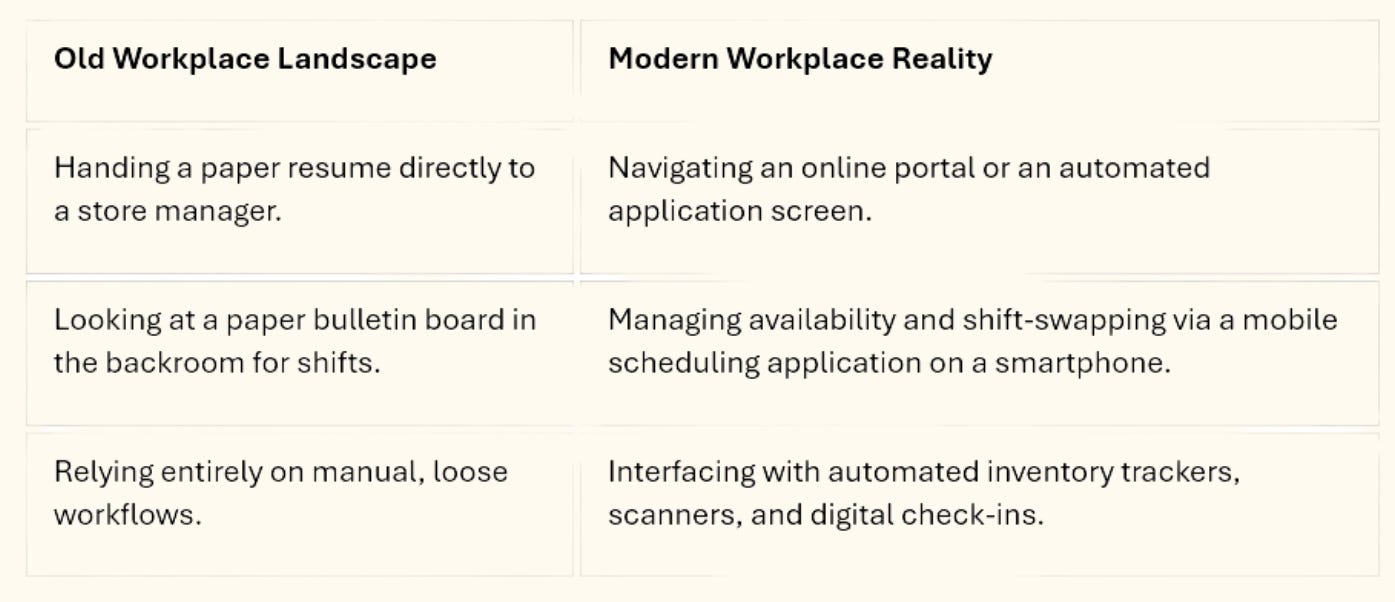
The Landscape: Navigating a “First Job” Today
Even though these jobs involve humble, hands-on tasks, the infrastructure around them has completely changed. This is where the modern workplace reality hits.
Pro-Tip on Requirements: Some positions may require certifications, training, background checks, or employer-provided preparation before a teenager can begin. For example, lifeguarding typically requires formal certification, while youth sports officiating often involves league-specific training. Parents should also check labor laws and age requirements in their state before their teenager accepts a position.
The Takeaway
A teenager’s first job has always been about more than earning a paycheck. But in a workplace where many routine tasks are becoming automated, the experiences teenagers gain outside the classroom matter more than ever.
The question is no longer simply: “What job can my teenager get?”
It is: “What kind of environment will help them develop the judgment, responsibility, and problem-solving abilities they will carry into the future?”